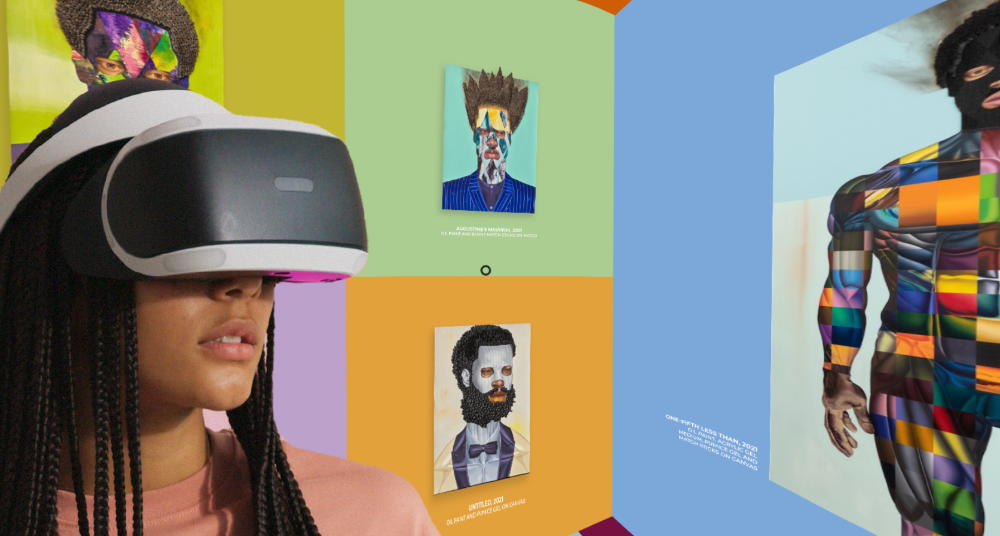
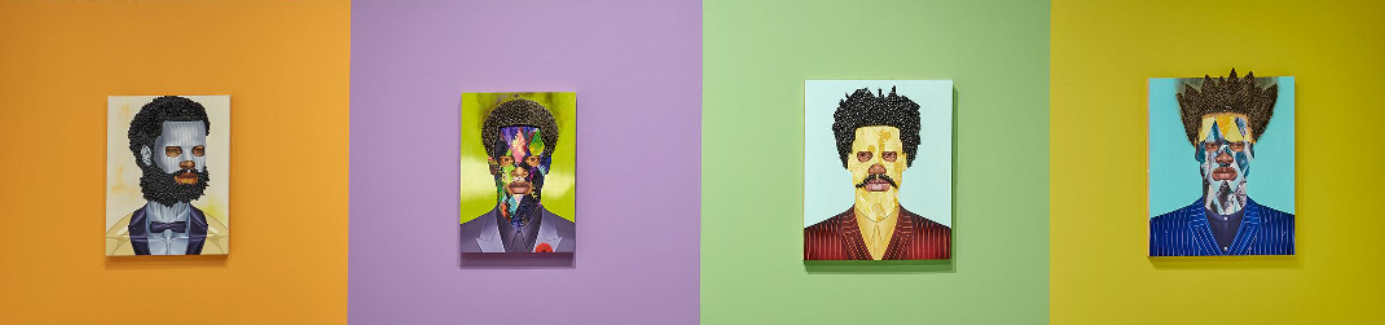
ew York artist Jeff Sonhouse's work displays an “urban edginess worthy of the city.” (Farrington) Sonhouse is especially known for his portraits of black men, however, he does create art is a variety of styles and genres. Sonhouse’s portraits "stare frontally and unflinchingly at the viewer from behind decorative “skins,” masks that camouflage skin color but expose just enough details of the mouth, nose, and eyes (unless obscured by sunglasses) to ensure recognition of the sitter’s black identity.”(Farrington) An excellent example of this effect is his painting titled Groucho’s Manifesto Left a Stone in My Kidney, where a man’s face is obscured behind a yellow mask, only his eyes nose, and mouth are visible. The artist in this image used daubs of pumice gel to create hair and a prominent mustache. The pumice gel effect was also used for the hair in the artist’s Untitled portrait as well. Sonhouse uses assemblage and collage to make his work distinct, to draw people in, so his work can’t be ignored.
Sonhouse’s work often includes overlaying of images with patterns of dots, stripes, chevron, and harlequin patterns. According to the artist the harlequin patterns find their inspiration in the trickster character of Native American and African folklore and link his art to the works of Pablo Picasso. He also makes use of three-dimensional objects in his paintings. Many of the paintings featured in this collection make use of burned match heads to simulate hair, in other paintings he used steel wool for a similar hair effect. Sonhouse has been known to incorporate cowrie shells, paper clips, and other adornments as well. In the Bodied collection, the paintings, Bodied on Audubon Ave, Augustine Mauvism, One Man Gang, One-Fifth Less Than, and Raulo all make use of burnt matchsticks for the hair of the figures.
Sonhouse finds inspiration in African, Panamanian, and Caribbean folklore. He also incorporates black American culture in his art. In this collection, the conjoined twins found in images such as One-Man Gang find their inspiration in the 1970s film The Thing with Two Heads. Sonhouse when speaking of this concept stated, “What I remember most vividly is how the figure’s movement was restricted. Today, I’ve adopted this figure to symbolize the individual – how they are affected physically and psychologically by the monolithic idea Blackness has now become.” (aesthetica)
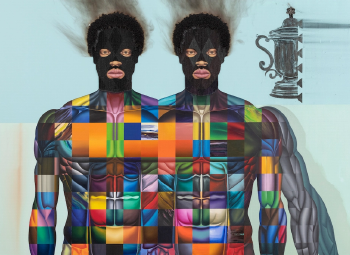 One Man Gang
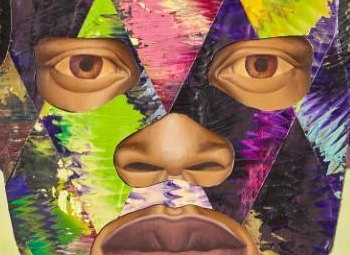 Masked Harlequin
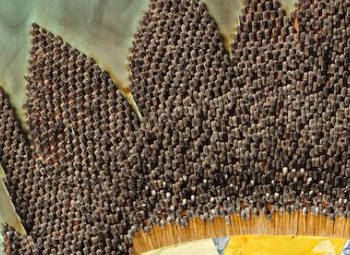 Burnt Match Detail