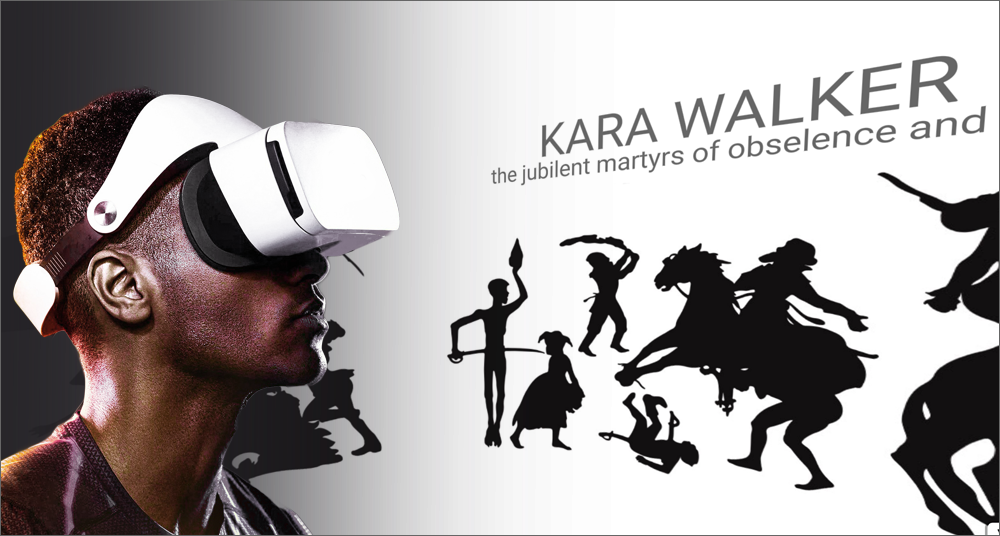
he Jubilant Martyrs of Obsolescence and Ruin is a 2015 cut-paper installation by artist Kara Walker. The black paper silhouettes of The Jubilant Martyrs of Obsolescence and Ruin are presented on a curved white wall in the High Museum of Atlanta, GA.
Walker was born in California but moved to Georgia as a teenager where she lived in the shadow of Stone Mountain, a park which contains a monumental sculpture of civil war generals cut in high relief into the side of a mountain. The Jubilant Martyrs of Obsolescence and Ruin contains iconography that is culled from the site including the three figures on horseback as well as the figure holding a torch.
Walker’s use of cut-paper is a parody of a popular craft/art form of using black paper to make small-framed silhouettes that were popular during the eighteenth and nineteenth centuries. The technique was typically used for whimsical scenes and portraiture. However, Walker’s cut-paper silhouettes counteract the whimsy of the original art form to recall the horrors of slavery. The paper cuts are graphic, sexual, and violent images that reflect her personal struggle with racial issues in her life and her understanding of the history of racism, sexism, and the horrors of slavery. Walker's art vividly expresses concepts forged in what she calls her “inner plantation.”
Walker’s cut-paper installation is presented on a curved wall, this choice connects the piece to cyclorama paintings that were popular in the later 19th century and early 20th century. They consisted of a large panoramic painting that encircled the viewing audience. The cycloramas were often visual and audio experiences located at historic battlefield sites including civil war sites. The use of the cyclorama format in The Jubilant Martyrs of Obsolescence and Ruin is yet one more of Walker’s critiques of the idea of civil war monuments.
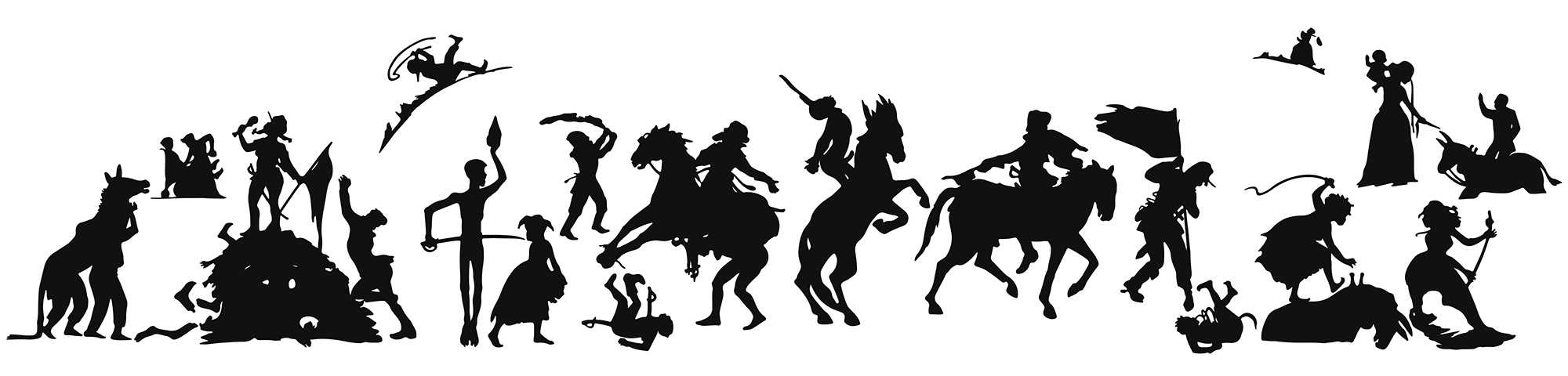
- Observing the installation of The Jubilant Martyrs of Obsolescence and Ruinbeginning from the left, we first notice two slaves dressed in a horse costume, this likely refers to racist minstrel shows.
- Next, we find a soldier in a wheelchair being run through with a sword by a mammy type of character, she is the antithesis of the non-threatening mammy characters.
- Next, a female dressed in military garb is holding a chicken leg and a ragged flag while standing in triumph on a pile of severed limbs. A soldier with a missing leg reaches up toward her. Her image is not unlike many of the standing civil war statues found in America.
- To the right is a sharecropper falling down a hill, commentary on fair wages and working rights of southern African Americans.
- The tall standing figure with a flame is a direct reference to a sculpture of Valor found at Stone Mountain. In juxtaposition to the image of Valor is an image that shows the horrors of slavery and a loss of innocence as a child holds a severed head.
- Above is an image of Union Officer William Tecumseh Sherman carrying a flame.
- The three equestrian silhouettes refer to the relief sculpture on Stone Mountain.
- A slave carrying the weight of Jefferson Davis and his horse. This horse concept is a common theme in Walker’s works. A figure is about to be trampled by the horse representing the vulnerability of enslaved people, the penetrating sword suggests sexual violence.
- A riderless horse rears up in a panic, it represents Stonewall Jackson who is missing from the composition. A hanging body of a lynched man with an erection represents the terrorism of white supremacy as well as racist stereotypes of black men.
- The third horse in the series features a backward riding Robert E. Lee.
- A civil war soldier stabs a flag into a female figure, the violence of war.
- Above we see a fight between two women, a slave and plantation owner over a mule, perhaps a reference to 40 acres and mule promise of reconstruction that went unfulfilled as land eventually returned to white owners.
- A blindfolded woman, perhaps a symbol of justice, coaxes a mule with a carrot. Dr. Martin Luther King is the rider.
- In the top right we see a woman headed north with a bindle, she represents the Great Migration.
*Descriptions paraphrased from High Museum.
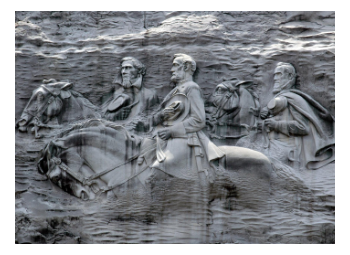 Stone Mountain Georgia
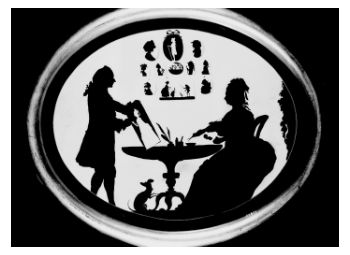 18th Century Cut Paper Silhouette
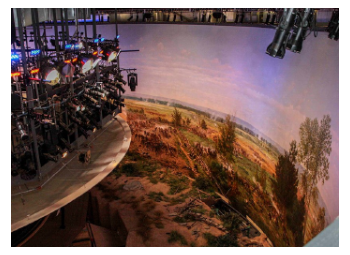 Cyclorama in Atlanta, GA